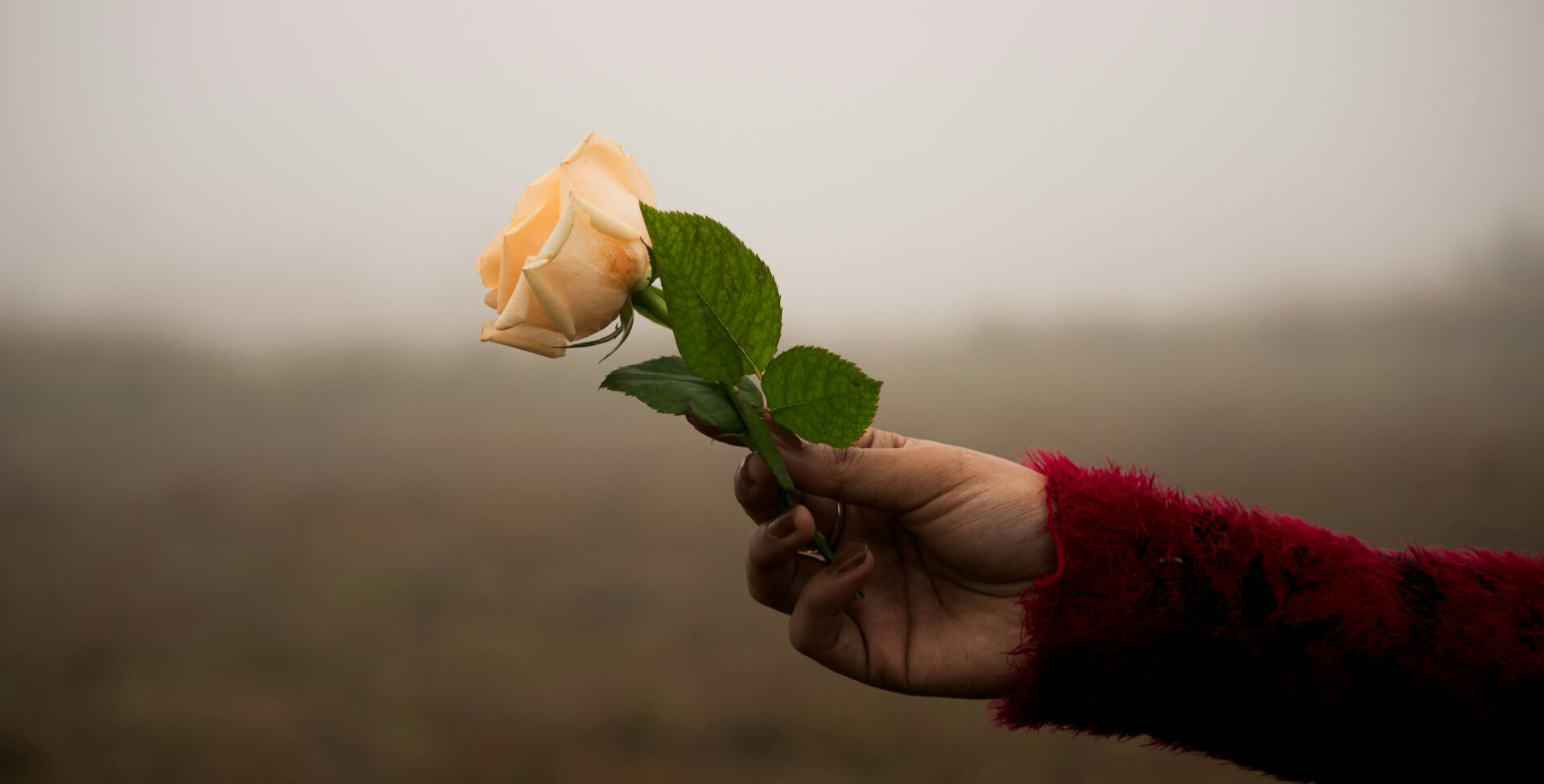
On poetry, pain, hope, and the lives our words may touch.
I write about pain.
I write about heartbreak, grief, longing, and the things we struggle to put into words. I write about the moments that leave us questioning ourselves, the goodbyes we never prepared for, and the feelings we carry long after everyone else assumes we’ve moved on.
But there is one thing I have always held close to my heart as a poet:
I don’t want my poetry to leave you drowning.
I want you to recognize your pain in my words. I want you to find something familiar in the lines you read, something that makes you pause and think, So, I’m not the only one who has ever felt this way.
I want you to sit with your pain when you need to. To stop pretending you’re okay when you’re not. To allow yourself to grieve what you have lost, to acknowledge what hurts, and to give yourself permission to feel the things you’ve spent so much time trying to understand.
I don’t believe every wound needs to be wrapped in a lesson. Not every heartbreak needs an explanation, and not every poem needs to end with everything falling into place.
Sometimes, we simply need someone to put our feelings into words when we cannot find the words ourselves.
And perhaps that is where poetry begins to matter.
I want you to feel, but I don’t want you to lose yourself in the feeling.
Pain deserves to be acknowledged. It deserves to be felt without shame or apology. But I don’t want my words to convince you that your pain is all there is to your life.
I don’t want you to read a poem about heartbreak and believe that love will always hurt. I don’t want you to read a poem about loss and believe that everything beautiful is destined to disappear. And I don’t want you to mistake a difficult chapter for the entirety of your story.
I want you to recognize the pain, sit with it, and learn what it means to you.
And when you’re ready, I hope you find the courage to stand again.
Not because the pain has disappeared. Not because you’ve finally figured everything out. But because, somewhere along the way, you realize that you are still here—and that there is still a life waiting for you beyond what hurts today.
I want you to find hope, even when my poems don’t give you an easy answer.
Sometimes, hope is a quiet realization that you deserve better. Sometimes, it is the courage to walk away from what keeps hurting you. Sometimes, it is the willingness to try again.
And sometimes, hope is simply choosing to see what tomorrow brings.
The magic happens when my words leave me.
Every poem begins somewhere within me. It comes from my own perspective, my own experiences, and my own understanding of the world.
But once I put that piece out for the world to read, something beautiful happens.
You receive it through your own experiences. You give it meaning through your memories, your heartbreaks, your victories, and the things you have never told anyone.
You might read a poem about a goodbye and think of someone I have never met. You might find yourself in a line I wrote for an entirely different reason. You might interpret my words in a way I never intended.
And that’s the magic of it.
I may be the one who writes the poem, but I don’t get to decide what it means to you.
I have my own perspective, but you have your own life. I bring the words; you bring the experiences that give them meaning.
That is why I don’t believe poetry needs to be perfectly understood to be meaningful. Sometimes, a line reaches a place in someone that neither the writer nor the reader can fully explain.
Sometimes, all it takes is a few words for someone to feel a little less alone.
And sometimes, a poem written from one person’s pain becomes the very thing another person needs to keep going.
I don’t measure my worth as a poet by numbers alone.
Of course, I appreciate every like, every share, every comment, and every person who chooses to read my work. They help my words travel farther than I ever could.
But those numbers have never been the reason I write.
One of the most profound things a writer can hear is a reader saying, “Your poem saved me. I was about to end my life, but I read this piece.”
I cannot think of many things more humbling than knowing that something I wrote reached someone at a moment when they were struggling to hold on.
To think that words born from a feeling I once carried could become a source of comfort for someone I may never meet—that is a kind of impact no number could fully measure.
I don’t share this because I believe a poem can save everyone, or because I want to carry the responsibility of someone else’s life. I share it because it reminds me that our words can matter in ways we may never witness.
There are readers who will never leave a comment. There are people who will quietly save a poem and return to it on a difficult night. There are words that may mean very little to someone today but become meaningful years later, when life finally gives them a reason to understand.
I may never know all the lives my writing has touched.
And perhaps I don’t need to.
I write to resonate. To leave a little ember in someone’s heart.
I don’t need to see how brightly it burns. It is enough to know that, somewhere, something I wrote made someone feel something they needed to feel.
If there is one thing I hope you take from my poetry…
It is not that you will never hurt again.
It is not that every loss will make sense, every goodbye will bring peace, or every difficult season will end the way you hope it will.
It is that you can acknowledge your pain without surrendering your entire life to it.
You can grieve and still grow. You can miss someone and still move forward. You can carry the memory of something beautiful without needing to return to it.
And you can be hurting today without believing that you will hurt this way forever.
I will write about the darkness. I will write about the things that break us, the things we lose, and the things we wish had turned out differently.
But somewhere between the ache and the last line, I will leave room for hope.
Not always an answer. Not always a resolution. Just enough room for you to imagine that your story still has somewhere to go.
Because I don’t write to tell you how to feel. I write to give you something you can feel your own way.
And if my words ever find you at a moment when you need them, I hope they remind you of this:
Your pain deserves to be heard, but it does not have to be the end of your story.
That is the kind of poet I want to be.
That is the kind of poetry I want to write.
And that is the ember I hope to leave with you.
With love,
Xy-sa Rhea
Lavender Pen Poet
*image: shiv narayan das / unsplash
